Join me for my 2023 Real Careers interview with Nicola Bryson of Edinburgh, Scotland.

Nicola Bryson is the Executive Officer to the Auditor General for Scotland, and to the Chief Operating Officer and the Board Chair. Here’s a look at her world.
Nicola’s pre-pandemic career: rise and shine
I rise at 6:00 a.m, and enjoy cuddles with my puppy girl before getting her breakfast. Pre-pandemic, I’d then get myself out the door by 6:50! The commute to the office is a 40 minute bus ride, followed by a 10 minute walk. On the way home, I walk 20 minutes and then take a train to help get my steps in and clear my head from the day. Now that I work from home, I get up at the same time but I add in a run/gym class instead of my commute. Who or what is on your commuting playlist/podcast? Jeremy Burrows for his weekly podcast. Apart from that, it’s a mixture of my fav radio station for 70s, 80s and 90 tunes … or I’d sit and listen to the voices in my head, as this commute was normally the only time where I’d do nothing but sit on my own and relax!
At the Office
Primary Responsibilities: As Executive Officer, my role includes all the usual EA tasks to ensure the AGS, COO and Board Chair have everything they need on a daily basis and are up to date with everything. I work with them on their personal and organisational priorities and projects, and undertake forward thinking and planning for their work by engaging with audit teams and corporate areas within the organisation. I like to add as much strategic value as I can by taking things away from them and making sure they are ready for everything. The AGS’ role is a Crown appointment and he reports to Parliament every week, so I assist our Parliament Engagement Lead Audit Director in engaging with key stakeholders, Clerking Teams, government and politicians to make sure it all runs smoothly.
I’ve led the learning and development (L&D) for our Business Support Services. This included an annual skills analysis and developing the training programme for the year. I had a great team around me who helped with this. Like me, they are so energetic and passionate about L&D that it’s great bouncing ideas around with them and coming up with the annual programmes to have a positive impact for the team. We do this to ensure our colleagues are keeping up to date with skills, new ways of working and engaging with each other to share knowledge and experiences.
I like to participate in other corporate strategic improvement projects when I can. I believe that every organisation should also include their corporate services departments in taking forward improvements and ensure they are heard when decisions are being made – there are times when we are forgotten about, but we are there to support whole organisations.
At the moment, I also have our Executive Team and Board forums to support. This all adds to the fun of my role ensuring papers and meetings run smoothly. Minutes are not my friend, though!
I’m very lucky at Audit Scotland, as they empower their colleagues to be involved in areas/tasks that might not be in their remit but interest them. Without this, I wouldn’t have progressed so much in my career over the past few years.
We have a great health and wellbeing culture in our office
Morning Routines: Apart from making a cup of green tea to get me properly awake and having a morning run, I have a daily routine of admin tasks of updating logs, time recording, reading relevant news that could impact who I support, and reviewing any new emails that I try to do when I first switch on. I normally have about 45 minutes before everyone else arrives or logs on (in the new hybrid world), which gives me some quiet time to get these out the way.
A typical day also involves emails review and actioning, checking/carrying out project milestones for any actions required, arranging meetings, chasing colleagues for work due to my executives, and forward planning. I try to look at my emails (and the bosses’) three times a day to ensure I can focus on the tasks, forward planning and project work I have.
How long is your work day? When in the office, I would work from 8:00 to 5:15 and then not at all after returning home. We have a flexible working policy and, in practice, I can have time out during the day to do personal tasks, take some fresh air time, etc. and work a bit earlier or later to make sure I cover my hours. The benefits at Audit Scotland make them a great employer.
Deliver what you say you will and, if you can’t, communicate early
Given health risks associated with views that sitting is the new smoking, have you or your employer adopted any steps to support good health? We have a great health and wellbeing culture in our office. It’s run by our Healthy Working Lives Group, who organise all activities including mindfulness, fitness (in person and virtual), and managing menopause. We are a very inclusive and forward-thinking organisation when it comes to supporting and promoting good health.

What might be a typical lunch? Working at home, I try to stay out of the biscuit cupboard! In the office, we’ve an array of places so I can be a lot more healthy with salads and fruit … with the odd pastry. It’s never away from my desk, though … which is very bad and all my own doing! In our office, we have a great business lounge where colleagues can sit away from their desks. The view is simply stunning, overlooking the castle. We are also very lucky to have some green space five minutes away, to walk or run around during lunch.
A note from Shelagh: This would be Edinburgh Castle Nicola’s mentioned. I’ve presented in her office and the view is incredible. Can you imagine having your work day lunch overlooking one of the oldest fortified places in the UK and Europe? The castle dates back to the 1100s and is built upon the aptly named Castle Rock. People have occupied Castle Rock – and doubtless the land on which Audit Scotland resides – since the Iron Age.
Inside the career
What is the most challenging aspect of your day or career? An absence, at times, of planning – which results in issues trying to secure time with senior executives, or processes not being followed. Throughout my career, I’ve had to deal with colleagues’ lack of understanding of the EA role – the whole they’re “just an EA” perception and not involving us in communications or pieces of work. We are here to make life easier for leaders and them if we can work collaboratively. We have so much knowledge and experience, and it benefits everybody when we are included in discussions.
I can also be a challenge to myself with my control freakishness.
What do you most enjoy about your career? Learning and implementing new ways of working to improve efficiency and effectiveness, not just for me but other colleagues and whomever I am looking after. I enjoy watching my leader grow and be the best they can, as they don’t need to worry about what’s going on behind them.
Audit Scotland has a clear structure for managing climate change activity, and is committed to further reducing its carbon emissions
On Saying “No”
I hardly ever said “no” when I was in the office, and took on anything that was requested, even when it meant just passing on a message. This had an impact on being able to dedicate enough time to everything and made me worry if I was giving my best to each task, and able to think clearly about what I was doing. I would manage expectations, though, as to when I could get things done and add the request to my workload.
When I do say “no”, I’m honest about why and point people in the direction of who should/could be able to help. Not everything requested is for me or my area, so I feel I have the right to say no if I don’t have the knowledge, skills or time. As long as we are professional and respectful in how we communicate this, it should be well received. We have to think of ourselves as well as others.
We have to think of ourselves as well as others
Working during a pandemic
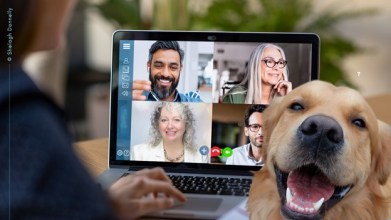 Tell us about your experience with remote working during the COVID-19 pandemic. I began working at home in March 2019. It was in spring 2022 that we began to again open our office to colleagues.
Working from home has absolutely been beneficial; I’ve gained time. As I don’t commute, I go running before work. Being home with my dog has meant getting away from my desk to walk at lunch time. On another note, I probably work more as I can stay online a bit longer, and the number of meetings and quick catch ups take up a lot of time.
How would you rate your productivity when working remotely? My productivity has definitely increased, but so has my workload as I take on more projects. However, it is all manageable and I wouldn’t have it any other way. No two days are the same, as I work on different things.
What would be your ideal work scenario as our new norms continue to take shape? Would you prefer to be back in the office, at home, or proceed with a hybrid approach? Audit Scotland is great. We’re working in a hybrid environment, with the option to go in whenever you want or to deal with critical business matters.
Audit Scotland introduced a flexible working policy even before the pandemic, to give colleagues the opportunity to work when and where they wanted, as long as we maintain our weekly hours. They trust us implicitly. I built a new routine of two days in the office and three days at home to mix it up and keep in touch with colleagues.
Being able to change my behaviours opened up new opportunities for me
What helps you to be resilient during challenging times, whether it’s a pandemic or other factors? Just being able to get outdoors and being able to take a deep breath away from people and clear my head helps. I’m very much of the opinion that everything happens for a reason and, to cope with that, you have to stay calm and keep things in perspective.
I had a coach a couple of years ago. She helped me create toolkits to understand my resistance to change, how to cope with difficult situations, how I could see the triggers coming – and how to work with it. It is hands down one of the best things that happened to me in my career. Being able to change my behaviours opened up new opportunities for me.
What’s been your biggest career lesson/takeaway from the COVID-19 pandemic? It’s that I don’t have to be in the office all the time – everything still runs and I can still get all the knowledge needed to do my job. And being able to keep calm – there are people worse off than me in the world and it’s OK to make mistakes.
What’s been your biggest life lesson/takeaway from the COVID-19 pandemic? To be happy and, if you’re not, change it!
How has the pandemic impacted your approach to professional development? Have you been attending webinars, and/or what other approach have you taken to professional growth at this point in time? It hasn’t had much impact for me, I’ve always taken time to do weekly L&D. If anything, I’ve read more about the pandemic’s impact on leaders, teams and organisations, and how to handle culture and new ways of working in this new environment. At the beginning, I did a bit more to get up to speed with Teams and find new ways of working for my boss and me.
The pandemic helped change the way we can deliver L&D, making it more accessible to everyone with webinars and virtual courses. This has really helped give people options and more opportunities to participate in learning and development.
Audit Scotland introduced a flexible working policy even before the pandemic … they trust us implicitly
Environmental sustainability
 Individuals and employers are increasingly aware of the importance of taking steps to reduce our carbon footprints. What steps are underway within your workplace to reduce carbon footprints? While Audit Scotland is committed to further reducing our carbon emissions and making how we work more sustainable, we recognise the level of reduction is slowing. This is partly due to the limited control we have on our energy consumption, being that we are in a multi-tenanted building. We will review the impact of the COVID-19 pandemic to see how we may use this to reduce our behaviours going forward. Here are some of our practices.
- We recycle paper waste, cardboard/product packaging, printer/photocopier ink cartridge recycling, mobiles and technology equipment.
- We are always looking for eco-friendly purchasing practices. We focus on embedding sustainability into our procurement activity and we include sustainability clauses in our procurement standard terms and conditions.
- We use eco-friendly cups, cutlery, stir sticks and coffee machine pods/capsules. We use hot taps for tea and coffee-making, and do not have kettles or toasters.
- Energy consumption reductions: Our offices are fitted with technology to improve our use of electricity. The office temperature is regulated using thermostats and timed to operate only during office hours. Ceiling lights automatically turn off after a period of inactivity in an area. We work on a “hot desk” basis and our number of workstations is fewer than our whole-time (full time) staff equivalent. We ceased printing our publications, and everything is now in a digital format. There is a printing service option if colleagues are not in the office, but this is only for high page volume meeting packs. We use thin client terminals and laptops that collectively use less energy than traditional desktop computers. Where possible, we are reducing the number of IT servers and using more cloud-based services. We recognise that, while this reduces our own emissions, it also contributes to the emissions of our cloud service provider.
- Travel: We’re reducing our quantity of leased cars. The nature of our work means that some travel is always likely to be necessary. To encourage active travel, we provide facilities for cycling to work and have promoted a bike-to-work scheme. Colleagues organise a walking club and a steps competition as part of Climate Week. Travel loans are available for annual travel passes. In 2019/20, we completed our first staff travel survey to consider how we can encourage colleagues to use active forms of travel to work.
- We report publicly on sustainability issues through our environment, sustainability and biodiversity annual report and by supplying relevant information to the Sustainable Scotland Network (SSN).
- Audit Scotland has a clear structure for managing climate change activity. The Audit Scotland Board, following consideration by Audit Scotland’s Executive Team, approves our climate change plan and carbon-saving targets. This approach ensures endorsement and clear leadership at the highest level. The Green Future Team, comprising representation from across the business, provides momentum for embedding sustainability across the organisation.
- We identified a number of projects for completion within a specific time frame. They range from policy development to a new climate change plan and carbon emission targets, a sustainable travel plan, climate change induction training for all staff, running a cycle-to-work scheme, continuing to participate in Climate Week Scotland to promote awareness of sustainability issues, and finding ways to better identify the emissions caused by Audit Scotland work that does not take place in our three offices.
Executive assistants should be included in discussions
Please highlight some steps you take to reduce your carbon footprint in your personal life. We recycle as much as we can, we have gone vegetarian twice a week, and I walk everywhere I possibly can to reduce travel.
Nicola’s world
 I was born in Glasgow, Scotland and live in Edinburgh. At heart, are you a city mouse or a country mouse? I’m probably a bit of both. I’m lucky to live just on the outskirts of the city – we’re 12 minutes away by train – and I can walk to the beach from my house, and have lots of walking trails and countryside on my doorstep. I suppose I’m still in a phase of life where I like to go out, but enjoy having the quiet life as well.
How long have you been in this career? It’s been 25+ years! – and I’ve loved every minute. What was your first such role? I was an Office Junior at a paper mill. They put me through college and gave me the start of the skills an administrator needs. I was very lucky that I could help with every area of the business, so I managed to build up my knowledge of how a business works.
Learning and development (L&D) should always be part of your weekly work
How did you learn about the opportunity that led to your current role? I think it was a recruitment website … but it was almost nine years ago!
How do you like to spend your time away from the office? I like being at the beach and walking my puppy girl, followed by running or going to the gym and being with my friends who fill my life with joy. I love being outside in the fresh air; it helps clear my head and is a great way to enjoy beautiful Scotland. I’m very lucky, too, to have a close group of friends through playing hockey; I spend time with them doing various “activities”.
How do you decompress or reward yourself after a tough day or week? CHOCOLATE and PROSECCO
Your ideal holiday or travel adventure? It depends; my husband doesn’t do the sun, so we spend all our holidays in Scotland with the dog. Our country is so BEAUTIFUL that I can’t get enough of it. The beaches in the Northwest rival the Caribbean, and we have been lucky enough to have amazing weather over the past 15 years, so we can really get out and enjoy it.
On the other hand, I do love a hot Mediterranean beach holiday with my friends … a week of chilling out on the beach followed by cocktails and lovely local food. Having time with my friends is so important.
I love being outside in the fresh air; it helps clear my head and is a great way to enjoy beautiful Scotland
Education and professional development
Education:Achieving my SVQ (Scottish Vocational Qualification) Levels 2 and 3 in Business Administration when I was starting out as an office junior certainly paved the way to help me move up the ladder to show I had more than office experience. In mid-career, I don’t think it mattered that I had no further formal education, as I was learning the trade more and gaining valuable hands-on experience.
I’ve now graduated at Level 4 in Business and Administration Management with Adam Fidler. This new level of formal education has re-opened my eyes to what else is out there for EAs and how we can elevate our role more. I’m not a career driven person; I just want to learn new things all the time. In the future, if I was to ever leave Audit Scotland, I think this kind of education would help as our role is changing for the better to see us as partners. Business leaders are looking for, and requiring more, from their EAs and managers now, in hard skills and also the important, softer interpersonal skills.
Business leaders are looking for, and requiring more, from their EAs and managers now
Peer and Professional Associations: I’m a member of EPAA, the UK’s Executive & Personal Assistants Association, and have qualified for its Fellow (FEPAA) membership grade. How has your participation in a professional association impacted you? It’s opened my eyes to the future of our profession and what we should be doing – how to elevate my role and make it better for me as well as the leader I support and the organisation I work for. Being an EA, PA or administrator isn’t just a job; it’s a career and an industry, and we deserve to have the same opportunities as other careers.
It’s also given me a network I can call on to help with delivering training within the business support services (BSS) annual L&D programme.
Networking, inspiration and achievements
Tell us about a career accomplishment or two of which you’re particularly proud. I was recognised as Employee of the Year back in 2004-ish. I was a Customer Service Manager for a sales and marketing distribution company, and spent a couple of years implementing and driving new processes as well as working with over 200 clients ranging from buyers from the big supermarkets to cash and carry outlets and independent wholesalers. It was a demanding role, but I loved nearly every minute of it.
Inspirational reads? Judgement Detox, by Gabrielle Bernstein
Recruitment is often competency-based, with competencies reflecting both behavioural (“soft” skills) and technical (“hard” skills) competencies. Tell us about your behavioural and technical competencies that are relevant to success in your current position. Here are seven.
- Planning and project management skills: This comes from being able to organise inboxes and calendars, with every little detail planned for each piece of work and thought through well in advance, to be able to have an overview of what is coming up at any given moment. This enables me to be flexible around emergencies or last minute issues that arise as I know what is happening on every piece of work.
- Proactivity skills: I’m always thinking ahead to anticipate what could come. Thinking about the end output of any task helps me to think through every scenario that could occur, and also helps me think of other ways of completing the task to make it better/easier/more efficient.
- Problem solving skills: Being able to think outside the box to come up with creative ways to solve problems is a must – from small problems of travel to bigger project areas.
- Strategic thinking: It’s not just about a task, but how what I’m doing can help my leader do their job to the best of their ability, and how it can affect the organisation.
- Assertiveness and influencing skills: This is part of the overall interpersonal skill package I think every EA should possess.
- Microsoft packages
- Emotional intelligence: After the past few years of COVID this is more important than ever to be able work and understand your colleagues together. This also helps with resilience in an ever-changing world.
Role models or mentors? I have a few, beginning with Caroline Gardner, my previous AGS (Auditor General for Scotland). This lady is the personification of elegance, calmness and knowing everything about her industry. I was in awe of the way she went about her work as well as her brain capacity, her calmness and the way she kept colleagues as a priority. She never missed a beat and kept me on my toes, so that I was always learning to keep up and be ahead. Everyone throughout the organisation and worldwide industry respects her! Her advice and confidence in me helped me to build my role over the past eight years.
There’s also Fraser McKinlay, who will hate me for saying it. I worked for him alongside Caroline, before he left to start up his own business. He pushed me on everything to take me out of my comfort zone. His working style is different from Caroline’s, and I use it now when leading projects and coaching others to push themselves. There was no micromanaging, and he let me help on some amazing national forums, one of which I have carried on doing since his departure. He gave me a blank canvas when I joined him and told me to train him as to what I needed. Over a period of seven years, we never looked back.
Both Caroline and Fraser gave me a safe place to grow and make mistakes, and developed me to think like a manager – not line managing, but in an overall sense, taking thinking to the next level. They inspired me, appreciated me and reminded me every day that the work of an EA matters. I know I can pick up the phone at any time to chat through anything!
Then there are Vic Wratten and Adam Fidler – amazing people who are pushing the boundaries to make administrators see their role is more than a job, and to push ourselves. We have a career, and we are in our own industry. Without them, I probably wouldn’t be where I am today. Over the past six years, I’ve taken everything I’ve learned from them and put it into practice for myself.
What skill(s) development or enhancement have you targeted for the next year? I’m in a new role of Executive Officer which now includes working with the Chief Operating Officer. I’d like to focus my training around corporate governance, performance reporting and corporate support to understand the basics. Do you have any career goals or accomplishments on your radar for the next five years? None at the moment, but ask me again in six months once I’ve settled into my new role, as this may take me on a new journey.
Spell check systems don’t always pick things up, and neither do I if it’s a rushed piece of work
The Digital Age
 What are your preferred forms of social media? Facebook and LinkedIn What apps do you make use of in your professional life? LinkedIn
How have digital assistants and artificial intelligence (AI) impacted your role? They’ve been nothing but a benefit. Microsoft has brought out some great add-ons to help with arranging meetings, finding time slots and helping to keep you on track each day. That helps you function more efficiently and gives time back for yourself, learning and development, or other tasks that are normally at the bottom of the list.
What positive impact(s) do you think artificial intelligence (AI), digital assistants and the internet of things (IOT) will have on the assistant of 2025? There will always be a need for a human assistant. AI will bring back time to be able to do exciting projects and work that we feel we don’t get the time to do as we’re always doing transactional work.
What forms of professional development would you recommend to assistants who want to ensure their roles remain relevant and rewarding in this digital age? Try all forms, and find what works best for you. I like visual learning – reading or watching something. Listening to podcasts, I can sometimes drift off to another thought track, and don’t properly focus on what I’m listening to.
Lessons Learned
You’re talking to a counterpart embarking on a job search. Briefly outline the approach you’d recommend. Think about where you want to be in two or five years’ time. Will this job you’re looking at give you that opportunity? Always look in the role description for tasks that will push you, and don’t worry if you don’t meet every requirement – you can say in the interview how you will approach developing these missing skills. Decide on the type of industry and type of sector in which you want to work.
Give us one or two of your best strategies for job interviews. Have bullet points written down. Having these to hand is a godsend, and knowing you have these with you helps to keep you calm. Make sure you have read up on the organisation; look at annual reports, and how they are structured. Always have a couple of questions at the ready. What do they want out of an assistant, what are the office culture and values like? This shows you are thinking about more than the tasks of the role.
What bit of insight would have been most helpful to you in the early stages of your career? The softer skills and EI (emotional intelligence) would have been really helpful, but it just didn’t seem to have been a thing back in the 90s. It was all very task-orientated then.
Having knowledge and being able to communicate are key
What are a couple of suggestions you’d offer that new assistant on the block, in terms of how to build effective business relationships within the office? Be honest and true to yourself. You have values and yes, we can all change and adapt, but you need people to see you as you are. Always deliver what you say you will and, if you can’t, communicate early. Take time to get to know the key people your leaders interact with.
Ask questions all the time to build up knowledge of the whole business and keep up to date with it. Having knowledge and being able to communicate are key tools to be able to make decisions. Be proactive and have a can do attitude!
Your most effective time management strategy? Forward plan everything, and you can then deal with any emergencies that come in. Look at emails two or three times a day; training myself to do this has been a godsend, as I’m not distracted anymore. I can focus and give full attention to projects and actions/tasks. This has really opened me to up my thinking on everything I do.
Take time to get to know the key people your leaders interact with
What are a couple of valuable early conversation topics you recommend an assistant initiate when beginning work with a new executive/principal? Find out about their communication and leadership styles. Learn about their working style and how they like things done; it may be that you can show them new, better ways.
I think I scared my current AGS when he first started. I provided a two-page questionnaire I have when onboarding an executive who is new to me, one we can chat through. We need to be in tune with each other as much as possible, as well as building trust and learning how each other works – it all helps the EA to be able to make decisions on their behalf. Starting these conversations early is the best way of doing that.
Even the best of us make mistakes, and we hopefully learn from them. Without disclosing any sensitive or confidential information, can you please describe a faux pas or other mistake you’ve made during your career, and the lesson you learned/how you recovered from it? I inserted the word “Public” without the “l” in a presentation. It was a last minute presentation I had to pull together and, no matter how many times I proofread it, I still didn’t see it in the rush of the moment. I learned that, if put in that position again, I would always ask a colleague to read through any last minute work and do a spellcheck just on that specific word! Spell check systems don’t always pick things up, and neither do I if it’s a rushed piece of work.
For those interested in promotion: Learning and development – reading, podcasts, TED Talks – should always be part of your weekly work. You can’t grow or progress without it; learning new hard and soft skills is imperative to your role. Make the time as much as you can, and implement anything you learn. Try things out, make mistakes and learn from them. Everything we do is a work in progress and can be improved through learning. Participate in corporate projects to understand the whole organisation and how it works.
Find yourself a coach and a mentor. They’ve seriously changed my thinking and behaviours, and opened my mind to strategic ways of thinking not just as an EA but as a manager in a business. I now have a toolkit to help handle any situation.

About Shelagh and her Real Careers interviews
About Shelagh: At the age of 21, Shelagh was a direct report to a COO. Within the same corporation, she became an editor and then a software trainer before a relocation and a return to what became an almost 30-year assistant career. Wrapping up that career in 2018 after a decade in governance, Shelagh’s been a direct report to four CEOs and accountable to four board chairs. Now, she delivers quality training internationally. She speaks at conferences, works with corporate clients, facilitates retreats, and delivers webinars to assistants in multiple countries.
About Shelagh’s Real Career interviews: Shelagh launched her Real Careers series in 2015. She interviews assistants around the globe in order to showcase individuals and the career itself. This series and the questions Shelagh poses continue to evolve. In addition to providing interesting reads and diverse perspectives, these interviews can constitute a form of professional development, as readers can explore different approaches assistants take to building and maintaining successful careers. To explore any of Shelagh’s interviews with assistants in 28 countries to date, follow the Interviews/Real Careers drop-down menus on this page – and enjoy!